Fixed-Wing Flight
Problem Statement
Fixed-wing platforms have fundamentally different dynamics and control constraints compared to hovering multirotors. This article captures aerodynamic lift-driven flight behavior for autonomous guidance studies.
Model and Formulation
Longitudinal force balance:
Lift relation:
Practical Notes
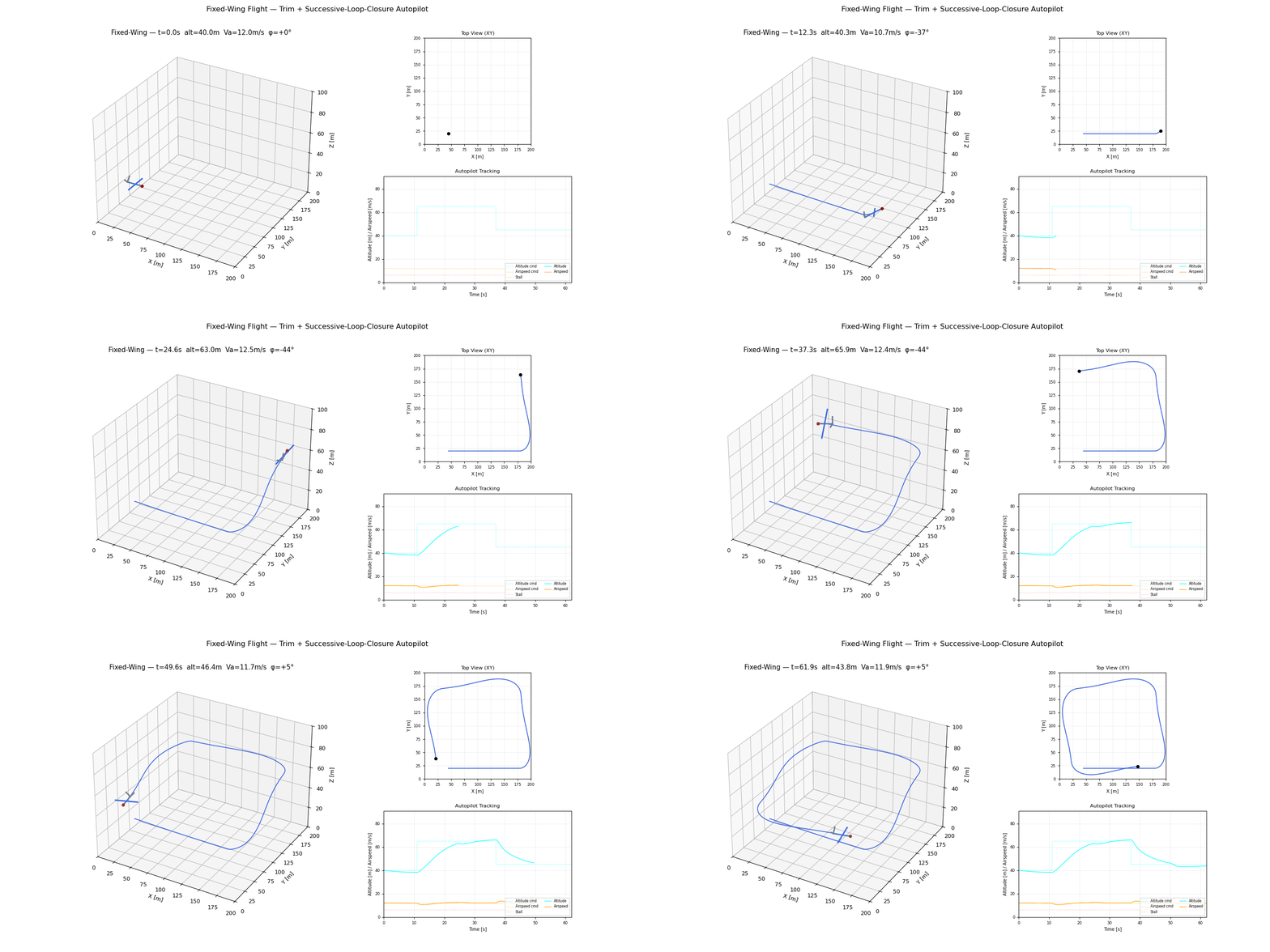
The airframe has to match the world. A fixed-wing has a stall speed and a turn radius, and both scale with the aircraft. A 13.5 kg Aerosonde trims near 35 m/s and needs hundreds of metres to come round; asked to hold 8 m/s in a 30 m box it is below stall from the first frame and simply falls out of the sky. The demo flies a 0.6 kg trainer — 6.3 m/s stall, 12 m/s cruise — in a 200 m world, several turn diameters across.
Start from trim, not from a guess.
reset_trimmed()solves for the equilibrium first, so the aircraft begins balanced. An untrimmed start spends its first seconds porpoising, and on a short clip that transient is most of what you see — the controller never gets a fair showing.Check the achievable turn radius before laying out a circuit:
r = V² / (g tan φ). At 12 m/s and 45° of bank that is 14.7 m.Minimum airspeed constraints are safety-critical.
Turn-rate limits depend on bank angle and available lift.
Wind models strongly influence path-following performance.
Evidence