
Convoy Escort
Problem Statement
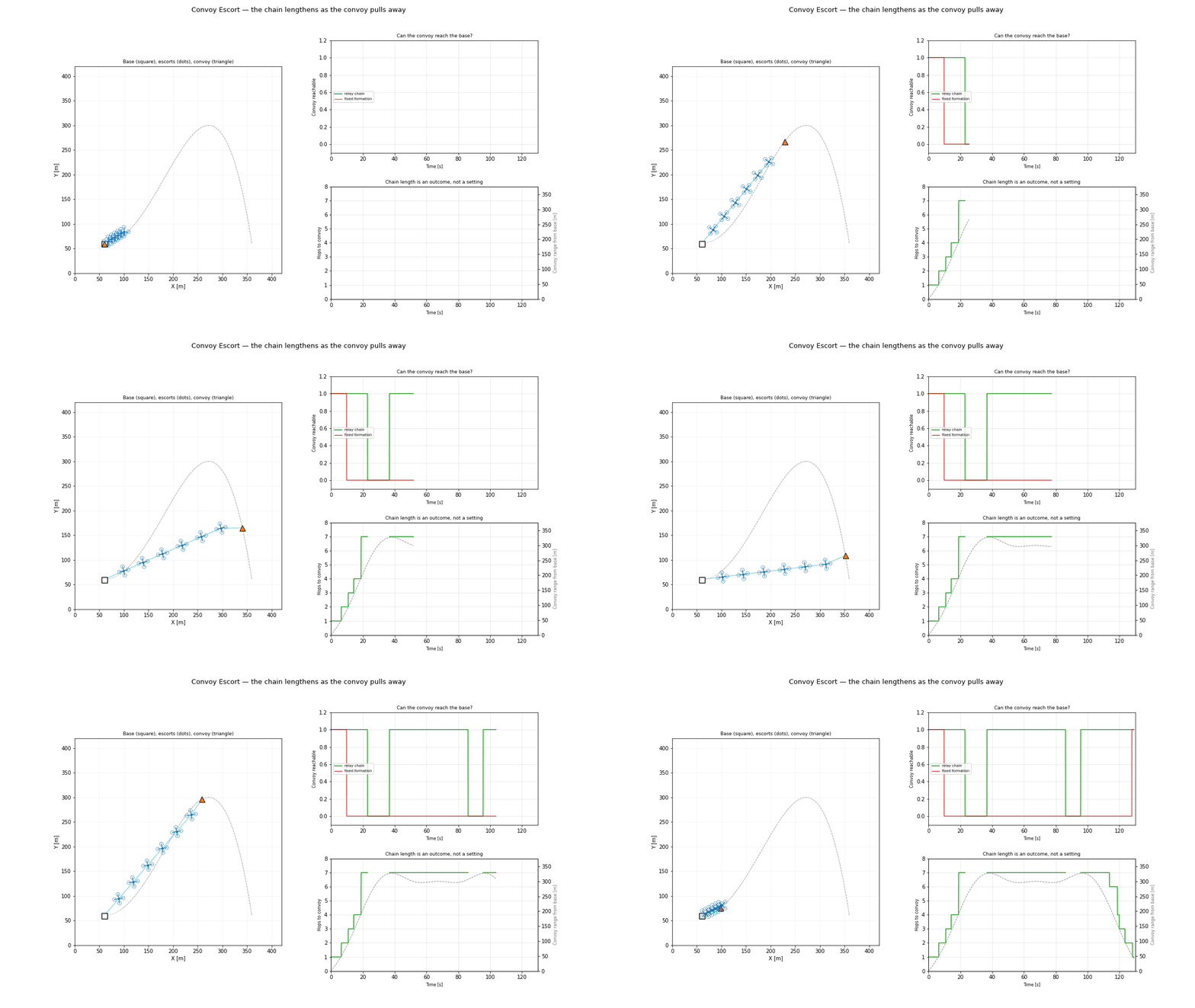
A ground vehicle drives a fixed route away from a base station. It carries no long-range radio, so it stays reachable only while a chain of UAVs bridges the gap — and the gap grows, so the chain has to lengthen, then shorten again as the route curves back.
Model and Formulation
Nothing plans the chain. Each aircraft is pulled toward the midpoint of the link it is responsible for and pushed by the shared connectivity gradient; the number of hops the route needs is an outcome, not an input.
Tuning and Failure Modes
- The obvious alternative fails badly. Keeping the escorts in formation around the convoy is what most people reach for first, and it loses the base entirely once the convoy is far enough out.
- Hop count is a coarse proxy for exposure: it ignores link margin, so one weak hop looks safer than two strong ones.
Evidence
| escort behaviour | convoy reachable |
|---|---|
| relay chain | 82.1 % of the run |
| fixed formation | 9.2 % |
Maximum 7 hops at a maximum convoy range of 327 m.
References
- Scherer and Rinner, Long-term area coverage and radio relay positioning (2018)
- CARA: Connectivity-Aware Relay Algorithm (2022)