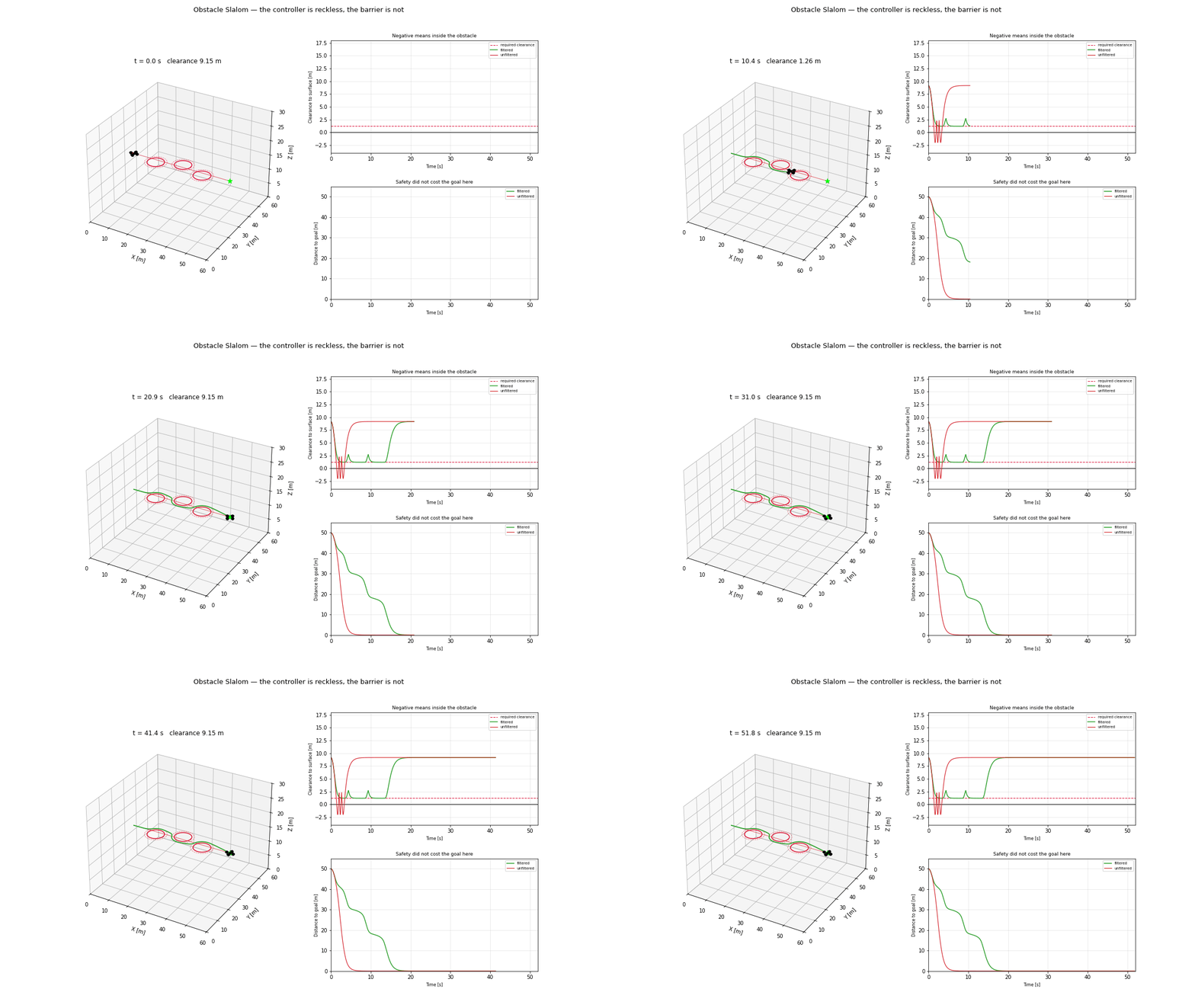
Obstacle Slalom
Problem Statement
The nominal controller flies dead straight at the goal and has never heard of the obstacles. Everything keeping the vehicle out of them is the barrier — which is the point: the safety argument does not depend on the controller being any good.
Model and Formulation
Tuning and Failure Modes
- Offset the obstacles by less than a radius from the direct path. At exactly one radius the straight line is tangent, and the unfiltered run looks almost safe by accident — the first version of this scene grazed at +0.001 m instead of penetrating.
- Clearance is a separate parameter from radius so the margin can be tuned without moving the obstacle.
Evidence
| run | min clearance | goal error |
|---|---|---|
| filtered | +1.189 m | 0.00 m |
| unfiltered | −1.997 m | 0.00 m |
Required clearance 1.200 m; the filtered run sits 1 % inside it, which is discretisation overshoot on a condition that holds in continuous time.